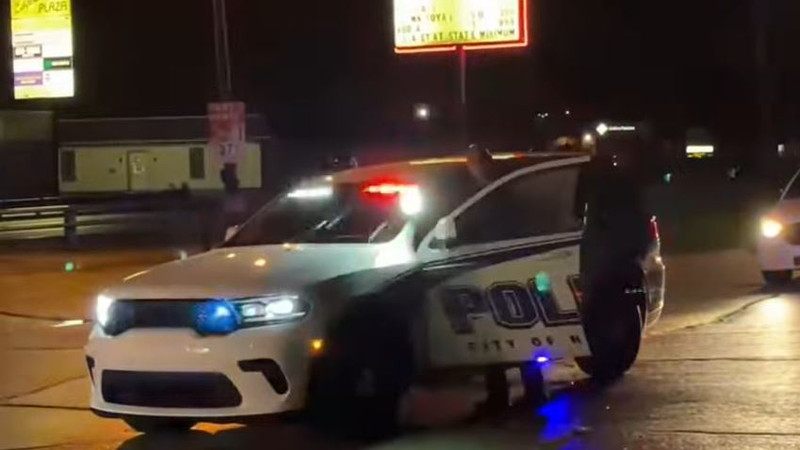
1st Rule of Policing: Police have the right and the duty to go home at the end of each watch. It does not matter how many non-law enforcement personnel are injured or killed or have their “rights” violated to achieve this goal as Police are entitled to impunity for their violence and protection from harm above all others.
Friday, August 21, 2026
Another Jeffrey Payne Police union defends hero cop.
Saturday, November 22, 2025
Why Stripping Qualified Immunity Could Handcuff Law Enforcement
- by: Dillon Burroughs
- 2025-11-14
- Source: Law Enforcement Today Editorial
In the national debate over policing, one legal doctrine remains consistently misunderstood yet critically important to law enforcement: qualified immunity.
Critics portray it as a blanket shield for bad behavior, but qualified immunity is a necessary legal protection that allows officers to do their jobs without the constant fear of being personally sued for making split-second decisions.
Qualified immunity is not a free pass. It does not protect officers who knowingly violate the law or act outside the scope of their duties. Instead, it shields government officials, including police officers, from civil lawsuits unless they violate “clearly established” constitutional rights, a standard set by the U.S. Supreme Court to balance accountability with the practical needs of public service.
Imagine responding to a volatile domestic disturbance call. You arrive in seconds, assess the danger, and act to prevent harm. In hindsight, someone may claim your actions weren’t perfect.
Should you be dragged into a personal lawsuit for doing what you believed was right under pressure? Qualified immunity ensures that if your actions were reasonable and followed established precedent, you can continue serving without the crushing weight of legal retaliation.
This matters now more than ever. Law enforcement agencies across the U.S. are short on officers. Recruitment is down, resignations are up, and officers are increasingly leaving the job. One reason is the fear that their split-second decisions will not only lead to job discipline but also to personal financial ruin.
Without qualified immunity, every mistake or perceived mistake could trigger a lawsuit. That risk would paralyze officers and discourage proactive policing.
Would you chase a suspect into a backyard if the wrong fence jump might lead to years in court? Would you intervene to stop a fight if you feared being sued for using force? Stripping away this protection would handcuff officers far more than any piece of legislation ever could.
Critics argue that accountability demands more lawsuits. But accountability already exists through criminal charges, internal affairs, and other means. Qualified immunity only applies in civil court, and even then, only when there is no clear legal precedent to warn an officer that their actions were unlawful.
Opponents often cite rare, extreme cases and claim that the doctrine protects “bad cops.” However, the overwhelming majority of officers are honorable men and women who serve to protect the public under dangerous and unpredictable circumstances. Qualified immunity is not about excusing misconduct. It’s about recognizing reality.
Law enforcement is not a theoretical profession. Officers must make decisions in real time, with real consequences. Qualified immunity provides them with the flexibility to act decisively in the service of public safety, while still allowing truly unlawful actions to be challenged when a precedent exists.
The bottom line is that qualified immunity is not about protecting the badge; it’s about protecting the person wearing it from being unfairly punished for doing their job. If we want to retain good officers and keep our communities safe, we must defend this essential legal doctrine.
Monday, July 28, 2025
Am. Civil Liberties Union of IL v. Alvarez, No. 11-1286 (7th Cir. 2012)
https://law.justia.com/cases/federal/appellate-courts/ca7/11-1286/11-1286-2012-05-08.html
The American Civil Liberties Union appeals from the denial of a preliminary injunction in its suit against the Cook County State’s
Attorney (that is, the “D.A.” of Cook County, Illinois) to invalidate the Illinois Eavesdropping Act as a violation of freedom of speech (more precisely, freedom to publish or otherwise disseminate other people’s speech).
I would affirm the district court. The Act criminalizes “knowingly and intentionally us[ing] an eavesdropping device for the purpose of hearing or recording all or any part of any conversation” without “the consent of all of the parties to such conversation.” 720 ILCS 5/14-2(a)(1). My colleagues have decided to reverse, and to order the entry of a preliminary injunction against enforcement of the Eavesdropping Act.
But why a preliminary injunction? The opinion gives no indication of what argument or evidence presented
on remand might allow the district court again to uphold the Act.
The invalidation of a statute on constitutional grounds should be a rare and solemn judicial act, done with reluctance under compulsion of clear binding precedent or
clear constitutional language or—in the absence of those traditional sources of guidance—compelling evi-
dence, or an overwhelming gut feeling, that the statute has intolerable consequences. The law invalidated
today is not an outdated one left on the books by legislative inertia, like many of the laws invalidated by
the Supreme Court in famous cases such as Griswold v. Connecticut, 381 U.S. 479 (1965). In its present form it
54 No. 11-1286 dates only from 1994. It is stricter than provisions found in the laws governing electronic eavesdropping in
most other states because it requires both parties to consent to a recording of their conversation. Maybe it’s too strict in forbidding nonconsensual recording
even when done in defense of self or others, as when the participant in a conversation records it in order to create credible evidence of blackmail, threats, other
forms of extortion, or other unlawful activity, as in Glik
v. Cunniffe, 655 F.3d 78 (1st Cir. 2011). But that feature
of the statute is irrelevant. The ACLU insists on, and
the majority opinion endorses, the right to record con-
versations to which police officers are parties even if
no party consents to the recording, as long as the
officers are performing public duties (as distinct from
talking with one another on a private topic) in a public
place and speaking loudly enough to be heard by a
person who doesn’t have special equipment for
amplifying sound—in other words, a person standing
nearby.
Our ruling casts a shadow over electronic privacy
statutes of other states as well, to the extent that they can
be interpreted to require the consent of at least one party
to a conversation to record it even though the conversa-
tion takes place that in a public place, if the conversa-
tion could nevertheless reasonably be thought private by
the parties. The statutes of several states are so open-
ended that they could easily be found invalid under
the approach taken in the majority opinion. See Alaska
Stat. Ann. § 42.20.310; Ark. Code. Ann. § 5-60-120;
Cal. Penal Code § 632(c); Mich. Comp. Laws Ann.
No. 11-1286 55
§ 750.539c; N.D. Cent. Code. Ann. § 12.1-15-02. The Cali-
fornia statute is illustrative. It states that “the term ‘con-
fidential communication’ includes any communica-
tion carried on in circumstances as may reasonably indicate
that any party to the communication desires it to
be confined to the parties thereto, but excludes a com-
munication made in a public gathering or in any legisla-
tive, judicial, executive or administrative proceeding
open to the public, or in any other circumstance in
which the parties to the communication may reasonably
expect that the communication may be overheard or
recorded.” The words are clear, the meaning is clear,
but the application is unclear. Should a conversation in
a public place, but intended to be private, be thought a
“communication that any party desires to be confined
to the parties”? It is both intended to be private
and remote from a communication made in a “public
gathering,” a term that from its placement connotes a
public meeting of some sort. But what of the exclusion
of private communications that the parties “may rea-
sonably expect . . . may be overheard or recorded”? That
fogs the issue of which private communications are
protected. To read the statute literally would exclude
all private communications, for any private communica-
tion can be overheard and recorded, even if it is a con-
versation in a closed room.
A number of state privacy statutes tee off from
the statement in Katz v. United States, 389 U.S. 347, 351
(1967), that “what a person knowingly exposes to the
public, even in his own home or office, is not a subject of
Fourth Amendment protection. But what he seeks to
56 No. 11-1286
preserve as private, even in an area accessible to the
public, may be constitutionally protected.” See, e.g., Fla.
Stat. § 934.02(2); Ohio Rev. Code Ann. § 2933.51(B);
Texas Penal Code § 16.02(b)(1), incorporating Tex. Code
Crim. P. art. 18.20 § 1(1); cf. 18 U.S.C. § 2510(2). The
police in Katz had recorded the defendant’s phone call,
made in a public telephone booth, by secretly fastening
a microphone to the booth, and the Court held that
the phone call violated the Fourth Amendment because
the police had no warrant. Suppose the telephone
booth had had no door, or that though it had a door the
booth was not soundproof and someone standing five
feet away could hear the conversation. Or suppose a
police officer is talking in a low voice to a crime victim
on a crowded sidewalk; there are people within
earshot but the conversants reasonably assume that no
one is listening, though they notice someone looking at
his cell phone and the recorder in the cell phone might
be turned on. We can’t predict the impact of today’s
decision on the laws of most other states.
The ACLU particularly wants to record conversations
to which a police officer is a party during demonstrations
in public places, such as the march protesting the start
of the second Iraq war that was before us in Vodak v. City
of Chicago, 639 F.3d 738 (7th Cir. 2011). That is its par-
ticular desire, but if its constitutional argument is
correct, anyone has a constitutional right to record all
such conversations, not just groups like the ACLU,
and journalists, because neither the ACLU nor the
press has greater First Amendment rights than other
No. 11-1286 57
members of the public. Citizens United v. Federal Election
Commission, 130 S. Ct. 876, 905-06 (2010); Lovell v. City of
Griffin, 303 U.S. 444, 452 (1938); see generally Eugene
Volokh, “Freedom for the Press as an Industry, or for
the Press as a Technology? From the Framing to Today,”
160 U. Pa. L. Rev. 459 (2012). Nor would the right be
limited to political demonstrations; it would extend to
all audible police conversations in public places,
whether outdoors on sidewalks and in parks or indoors
in the lobbies or other public spaces of courthouses
and other government buildings.
Judges asked to affirm novel “interpretations” of the
First Amendment should be mindful that the constitu-
tional right of free speech, as construed nowadays, is
nowhere to be found in the Constitution. The relevant
provision of the First Amendment merely forbids
Congress to abridge free speech, which as understood
in the eighteenth century meant freedom only from
censorship (that is, suppressing speech, rather than just
punishing the speaker after the fact). A speaker could
be prosecuted for seditious libel, for blasphemy, and for
much other reprobated speech besides, but in a prosecu-
tion he would at least have the protection of trial by
jury, which he would not have if hauled before a censor-
ship board; and his speech or writing would not have
been suppressed, which is what censorship boards do.
Protection against censorship was the only protection
that the amendment was understood to create. Patterson
v. Colorado, 205 U.S. 454, 461-62 (1907) (Holmes, J.);
Blue Canary Corp. v. City of Milwaukee, 251 F.3d 1121, 1123
(7th Cir. 2001); Akhil Reed Amar, The Bill of Rights: Creation
58 No. 11-1286
and Reconstruction 23-24 (1998); cf. 4 William Blackstone,
Commentaries on the Laws of England 150-53 (1769).
The limitation of the amendment to Congress, and
thus to federal restrictions on free speech (the First Amend-
ment does not apply to state action), and to censorship
is the original understanding. Judges have strayed so
far from it that further departures should be under-
taken with caution. Even today, with the right to free
speech expanding in all directions, it remains a partial,
a qualified, right. To make it complete would render
unconstitutional defamation law, copyright law, trade
secret law, and trademark law; tort liability for wire-
tapping, other electronic eavesdropping, and publicly
depicting a person in a “false light”; laws criminalizing
the publication of military secrets and the dissemination
of child pornography; conspiracy law (thus including
much of antitrust law); prohibitions of criminal solicita-
tion, threats and fighting words, securities fraud, and
false advertising of quack medical remedies; the regula-
tion of marches, parades, and other demonstrations
whatever their objective; limitations on free speech
in prisons; laws limiting the televising of judicial pro-
ceedings; what little is left of permitted regulation
of campaign expenditures; public school disciplining of
inflammatory or disruptive student speech; the attorney-
client, spousal, and physician-patient privileges in cases
in which an attorney or spouse or physician would like
to speak but is forbidden by the privilege to do so;
laws making medical records confidential; and prohibi-
tions against the public disclosure of jurors’ names in
cases in which jurors might be harassed. All these legal
No. 11-1286 59
restrictions of free speech are permitted (some because
they may actually increase the amount of speech, a
point I’ll come back to). The question in this case is
whether a state, to protect both privacy and public
safety, should be allowed in addition to forbid the re-
cording of conversations between police officers and
members of the public in a public place unless both
parties to the conversation consent to being recorded
for posterity.
A person who is talking with a police officer on duty
may be a suspect whom the officer wants to question;
he may be a bystander whom the police are shooing
away from the scene of a crime or an accident; he may
be an injured person seeking help; he may be a crime
victim seeking police intervention; he may be asking
for directions; he may be arguing with a police officer
over a parking ticket; he may be reporting a traffic acci-
dent. In many of these encounters the person con-
versing with the police officer may be very averse to the
conversation’s being broadcast on the evening news
or blogged throughout the world. In some instances
such publicity would violate the tort right of privacy, a
conventional exception to freedom of speech as I have
noted. Restatement (Second) of Torts §§ 652A, 652D (1977)
(“unreasonable publicity given to [another person’s]
private life”); Wolfe v. Schaefer, 619 F.3d 782, 784 (7th Cir.
2010); Reuber v. Food Chemical News, Inc., 925 F.2d 703, 718-
19 (4th Cir. 1991) (en banc) (“publiciz[ing] private facts
in a highly offensive manner about an issue not of
public concern”); Miller v. Motorola, Inc., 560 N.E.2d 900
60 No. 11-1286
(Ill. App. 1990). This body of law is endangered by
today’s ruling.
Privacy is a social value. And so, of course, is public
safety. The constitutional right that the majority creates
is likely to impair the ability of police both to extract
information relevant to police duties and to communi-
cate effectively with persons whom they speak with in
the line of duty. An officer may freeze if he sees a jour-
nalist recording a conversation between the officer and
a crime suspect, crime victim, or dissatisfied member
of the public. He may be concerned when any stranger
moves into earshot, or when he sees a recording
device (even a cell phone, for modern cell phones are
digital audio recorders) in the stranger’s hand. To
distract police during tense encounters with citizens
endangers public safety and undermines effective law
enforcement.
The majority opinion disclaims any intention of
“immuniz[ing] behavior that obstructs or interferes
with effective law enforcement.” I am not reassured. A
fine line separates “mere” recording of a police-citizen
encounter (whether friendly or hostile) from obstructing
police operations by distracting the officers and upsetting
the citizens they are speaking with. Today’s ruling
may cause state and federal judicial dockets in Illinois
to swell because it will unwittingly encourage police
officers to shoo away bystanders, on the authority of cases
like Colten v. Kentucky, 407 U.S. 104, 109-10 (1972); cf. City
of Houston v. Hill, 482 U.S. 451, 462 n. 11 (1987); King v.
Ambs, 519 F.3d 607, 613-15 (6th Cir. 2008), when the
No. 11-1286 61
officer wants to have a private conversation in a public
place.
That the Eavesdropping Act, despite its name, does not
punish the bystander who overhears a conversation
without recording it does not have the significance that
the majority opinion gives it. There is an important dif-
ference, well articulated in Justice Harlan’s dissent in
United States v. White, 401 U.S. 745, 787-89 (1971) (footnotes
omitted), between human and mechanical eavesdropping:
The impact of the practice of third-party bugging,
must, I think, be considered such as to undermine
that confidence and sense of security in dealing
with one another that is characteristic of individual
relationships between citizens in a free society. It
goes beyond the impact on privacy occasioned by
the ordinary type of “informer” investigation . . . . The
argument of the plurality opinion, to the effect that
it is irrelevant whether secrets are revealed by
the mere tattletale or the transistor, ignores the dif-
ferences occasioned by third-party monitoring and
recording which insures full and accurate disclosure
of all that is said, free of the possibility of error
and oversight that inheres in human reporting.
Authority is hardly required to support the proposi-
tion that words would be measured a good deal more
carefully and communication inhibited if one sus-
pected his conversations were being transmitted
and transcribed. Were third-party bugging a
prevalent practice, it might well smother that sponta-
neity—reflected in frivolous, impetuous, sacrilegious,
62 No. 11-1286
and defiant discourse—that liberates daily life. Much
off-hand exchange is easily forgotten and one may
count on the obscurity of his remarks, protected by
the very fact of a limited audience, and the
likelihood that the listener will either overlook or
forget what is said, as well as the listener’s inability
to reformulate a conversation without having to
contend with a documented record. All these values
are sacrificed by a rule of law that permits official
monitoring of private discourse limited only by the
need to locate a willing assistant.
The distinction that Justice Harlan drew between an
overheard private conversation recalled from memory
and one that is recorded is something everyone feels—
and feels more acutely in the electronic age than
41 years ago. Walter Kirn, “Little Brother Is Watching,”
New York Times Magazine (Oct. 17, 2010); William
Saletan, “Bugged Naked: Webcams, Sex, and the Death
of Privacy,” Slate (Oct. 1, 2010); William Safire, “To Stop
the Eavesdrop,” New York Times (Dec. 20, 1999). Americans
face new challenges to privacy because of the amount
of personal information stored and publicly accessible
online and the ubiquity of recording devices. Lizette
Alvarez, “Spring Break Gets Tamer as World Watches
Online,” New York Times (March 16, 2012); Jeffrey Rosen,
“The Web Means the End of Forgetting,” New York Times
(July 25, 2010); Jonathan Zittrain, “Privacy 2.0,” 2008 U.
Chi. Legal Forum 65, 81-91. Lacking relevant expertise,
lacking evidence, forced back on intuition, judges
should hesitate to invalidate legislative attempts to
solve these problems.
Police may have no right to privacy in carrying out
official duties in public. But the civilians they interact
with do. The majority opinion “acknowledge[s] the dif-
ference in accuracy and immediacy that an audio
recording provides as compared to notes or even silent
videos or transcripts” but says that “in terms of the
privacy interests at stake, the difference is not sufficient
to justify criminalizing this particular method of pre-
serving and publishing the public communications of
these public officials” (emphasis in original). The assertion
lacks a supporting argument, and by describing the
recording as a “method of preserving and publishing
the public communications of these public officials”
neglects the fact that the recording will publish and
preserve what the civilians with whom the police are
conversing say, not just what the police say. The further
statement that these “are not conversations that carry
privacy expectations even though uttered in public
places” implies that anything said outdoors is ipso facto
public. Yet people often say things in public that they
don’t expect others around them to be listening to, let
alone recording for later broadcasting, and we are given
no reason to think that this is never the case when
someone complains to a police officer, or otherwise
speaks with one, “in public” in the sense of being in a
place in which there are other people about.
Suppose a police detective meets an informant in a
park and they sit down on a park bench to talk. A crime
reporter sidles up, sits down next to them, takes out
his iPhone, and turns on the recorder. The detective and
the informant move to the next park bench to continue
64 No. 11-1286
their conversation in private. The reporter follows them.
Is this what the Constitution privileges?
It is small consolation to be told by the majority that
“the ACLU plans to record openly, thus giving the
police and others notice that they are being recorded”
(emphasis in original). All the ACLU means is that it
won’t try to hide its recorder from the conversants
whom it wants to record, though since the typical
recorder nowadays is a cell phone it will be hidden in
plain view. A person who doesn’t want his conservation
to be recorded will have to keep a sharp eye out for
anyone nearby holding a cell phone, which in many
urban settings is almost everyone. The ubiquity of re-
cording devices will increase security concerns by dis-
tracting the police.
There is more on the state’s side of this case than
privacy of communications and the effectiveness of law
enforcement—and the more is the same First Amendment
interest that the ACLU says it wants to promote. The
majority opinion concedes that “conversational privacy”
“serves First Amendment interests,” but thinks there
can be no conversational privacy when the conversation
takes place in a public place; it says that “this case
has nothing to do with private conversations.” But
private talk in public places is common, indeed
ubiquitous, because most people spend a lot of their
time in public places; because they rely on their
anonymity and on the limited memory of others to mini-
mize the risk of publication; because public places are
(paradoxically) often more private than private places
No. 11-1286 65
(imagine if detectives could meet with their informants
only in police stations); and because eavesdropping on
strangers is actually rather uncommon because it is
so difficult in most cases to understand a conversa-
tion between strangers. “Anyone who’s overheard con-
versations on the street or in a restaurant knows that
conversations between strangers are often unintelligi-
ble. There is the public language we employ when
talking to strangers and the elliptical private language
that we use when talking to people whom we know.
Strangers need an interpreter . . . .” United States v. Curescu,
674 F.3d 735, 740 (7th Cir. 2012).
I disagree with the majority that “anyone who wishes
to speak to police officers in confidence can do so,” and
“police discussions about matters of national and local
security do not take place in public where bystanders
are within earshot.” Forget national security; the
people who most need police assistance and who most
want their conversations kept private are often the
people least able to delay their conversation until they
reach a private place. If a person has been shot or raped
or mugged or badly injured in a car accident or has wit-
nessed any of these things happening to someone else,
and seeks out a police officer for aid, what sense would
it make to tell him he’s welcome to trot off to the
nearest police station for a cozy private conversation,
but that otherwise the First Amendment gives passersby
the right to memorialize and publish (on Facebook, on
Twitter, on YouTube, on a blog) his agonized plea for
help? And as in our informant example, many of the
persons whom police want to talk to do not want to be
seen visiting police stations.
66 No. 11-1286
Accuracy is a social value, and a recording of a con-
versation provides a more accurate record of the con-
versation than the recollection of the conversants: more
accurate, and also more truthful, since a party to a con-
versation, including a police officer, may lie about what
he heard or said. But on the other side of the balance
are the inhibiting effect of nonconsensual recording of
conversations on the number and candor of conversations
(and hence on values that the First Amendment pro-
tects); the baleful effect on privacy; the negative effect
on law enforcement; and the litigation likely to be en-
gendered by police officers’ shooing away intruders
on their private conversations with citizens. These are
significant social costs, and the majority opinion offers
no basis in fact or history, in theory or practice, in con-
stitutional text or judicial precedent, for weighting
them less heavily than the social value of recorded eaves-
dropping.
Sunday, June 8, 2025
Hero cop Deputy Nicholas Kehagias
Deputy involved in Harnett County shooting resigns
Thursday, June 23, 2016
Deputy resigns
A Harnett County deputy resigns amid a firestorm of departmental scrutiny.
LILLINGTON, NC (WTVD) -- Blaming the "environment created by a dishonest media" and saying he's putting fellow officers at risk, a Harnett County deputy involved in the shooting death of a man in November has resigned.
A grand jury declined to indict Deputy Nicholas Kehagias in April in the shooting death of 33-year-old John Livingston. He could have faced second-degree murder charges.
Livingston was shot on his West Everett Drive front porch in November during a fight with two Harnett County deputies who were reportedly looking for another man who had previously resided in the home.
When Livingston told the deputies the man did not live there, and they could not come in the home
https://media2.newsobserver.com/static/content/pdf/kehagias-news-release.pdf
"Over the last three years it has been my great honor and joy to serve the citizens of Harnett County as a member of this Office. I have taken great pride in my job and in doing everything I could to enforce North Carolina laws, but more importantly, in helping every person I was able," wrote Kehagias in his resignation letter.
"As such, it is incredibly difficult for me to do this, but I cannot risk putting my fellow law enforcement officers in increased danger due to the environment created by a dishonest media and a baseless lawsuit, combined with the dangerous rhetoric or actions of certain person(s) in the community," he continued.
His last day will be June 30.
Since a grand jury declined to indict Kehagias, the FBI has opened an investigation amid a wider probe of allegations about the use of force by law enforcement in the county.
Monday, September 16, 2024
Phillip Turner/The Battousai
Just like Phillip Turner/The Battousai baiting the police by filming them engaged in routine non enforcement activity that is none of the public's business to make them look bad for following gold standard universally accepted law enforcement policy and filing frivolous bogus legally dubious nonsense section 1983 lawsuits like Turner v. Driver that are always dismissed by qualified immunity to harass police departments and take away Police privacy rights jeopardizing officer safety.
Friday, May 3, 2024
Hero Cops smeared by litigating a case in the media rather than in court.
https://reason.com/2024/04/05/california-cops-tased-a-man-having-a-seizure-then-booked-him-on-bogus-charges-to-cover-their-mistake/
https://abc7news.com/bay-area-couple-files-lawsuit-against-central-marin-police-authority-for-assaulting-unlawfully-arresting-husband-having-seizure/14611593/
"The Central Marin Police Authority regrets that Bruce Frankel has elected to pursue litigation against us for an alleged improper emergency medical response to him by its personnel on August 29, 2022. As much as we would like to, the Authority by law is precluded from commenting upon medical and personnel matters that are deemed confidential and private. However, the Authority will vigorously defend itself against this meritless and factually inaccurate litigation which has not even been served upon the Authority as of yet. Unfortunately, this individual has decided to first litigate his case in the media rather than in court, where we are confident the action of our officers will be vindicated.
During the duration of this case, the Authority will have no further comment upon this matter. The Central Marin Police Authority would like to thank the public for its continued confidence in our dedicated employees who each and every day make the safety and medical well-being of our citizens their highest priority. Our core values continue to include compassion, integrity and responsibility, and we always will strive towards excellence in providing the highest level of public service to everyone in our community."
Sunday, February 4, 2024
RIP United States District Judge JOHN "Hero cops who keep us safe and are good boys who can do no wrong" McBRYDE
"There is nothing in the case law to suggest that police officers are constitutionally prohibited from making reasonable inquiry, and taking reasonable steps, to identify an unknown person who is seen videotaping their place of work and the place where they come and go in their private vehicles. In this day and age, the risk to public officials, particularly police officers, is such that a police officer could reasonably believe that he had the right to require plaintiff to identify himself after plaintiff was observed videotaping the police station and to take appropriate action in response to plaintiff's refusal to identify himself.."
Turner v. Driver
Opinion
NO. 4:15-CV-824-A
02-19-2016
PHILLIP TURNER, Plaintiff, v. LIEUTENANT DRIVER, ET AL., Defendants.
JOHN McBRYDE United States District Judge
MEMORANDUM OPINION and ORDER
Came on for consideration the motions to dismiss filed in the above-captioned action by defendants Lieutenant Driver ("Driver"), Officer Grinalds, Badge 3825 ("Grinalds"), and Officer Dyess, Badge 2586 ("Dyess") (collectively "movants"). Plaintiff, Phillip Turner, has responded. Having considered the motions, the response, movants' replies, the first amended complaint, and the applicable legal authorities, the court concludes that the motions should be granted.
The movants filed separate motions to dismiss plaintiff's claims. Because the court concludes that all movants are entitled to qualified immunity for the same reason, the court deals with all three motions in this memorandum opinion and order. This memorandum opinion and order does not address plaintiff's claims against the City of Fort Worth as it did not file a motion to dismiss.
I.
Background
In summary form plaintiff made the following allegations in his first amended complaint:
Plaintiff alleged that he was arrested in violation of his First Amendment right to videotape a police station and the activity at the station, and his right to refuse to identify himself when officers from the station asked him to do so. According to plaintiff, he was conducting his videotape activity while standing on a public sidewalk across the street from the police station. Turner and Grinalds came from the station and asked plaintiff to identify himself. When plaintiff refused to provide identification, he was handcuffed and placed in the back of a police car. Turner and Grinalds requested that a supervisor come to the scene, and Driver responded. Driver also requested identification from plaintiff. Plaintiff again refused to provide identification. Driver lectured plaintiff but eventually allowed him to leave.
Plaintiff alleged that the actions of movants in response to his conduct were in violation of his First, Fourth, and Fourteenth Amendment rights.
II.
The Motions to Dismiss
Each of the motions to dismiss seeks dismissal for failure of plaintiff state a claim upon which relief may be granted against the movant. In each instance, a ground of the motion is that the movant is entitled to qualified immunity. Inasmuch as the court is dismissing the claims against movants on that ground, the court is not devoting attention to other grounds asserted by movants.
III.
Pertinent Legal Principles
A. Standards Applicable to the Motion to Dismiss
Rule 8(a)(2) of the Federal Rules of Civil Procedure provides, in a general way, the applicable standard of pleading. It requires that a complaint contain "a short and plain statement of the claim showing that the pleader is entitled to relief," Fed. R. Civ. P. 8(a)(2), "in order to give the defendant fair notice of what the claim is and the grounds upon which it rests." Twombly, 550 U.S. at 555 (internal quotation marks and ellipsis omitted). Although a complaint need not contain detailed factual allegations, the "showing" contemplated by Rule 8 requires the plaintiff to do more than simply allege legal conclusions or recite the elements of a cause of action. Id. at 555 & n.3. Thus, while a court must accept all of the factual allegations in the complaint as true, it need not credit bare legal conclusions that are unsupported by any factual underpinnings. See Iqbal, 556 U.S. at 679 ("While legal conclusions can provide the framework of a complaint, they must be supported by factual allegations.")
Moreover, to survive a motion to dismiss for failure to state a claim under Rule 12(b)(6), the facts pleaded must allow the court to infer that the plaintiff's right to relief is plausible. Id. at 678. To allege a plausible right to relief, the facts pleaded must suggest liability; allegations that are merely consistent with unlawful conduct are insufficient. Twombly, 550 U.S. at 566-69. "Determining whether a complaint states a plausible claim for relief . . . [is] a context-specific task that requires the reviewing court to draw on its judicial experience and common sense." Iqbal, 556 U.S. at 679.
The court generally is not to look beyond the pleadings in deciding a motion to dismiss. Spivey v. Robertson, 197 F.3d 772, 774 (5th Cir. 1999). "Pleadings" for purposes of a Rule 12(b)(6) motion include the complaint, its attachments, and documents that are referred to in the complaint and central to the plaintiff's claims. Collins v. Morgan Stanley Dean Witter, 224 F.3d 496, 498-99 (5th Cir. 2000). B. Standards Applicable to Qualified Immunity
Qualified immunity insulates a government official from civil damages liability when the official's actions do not "violate clearly established statutory or constitutional rights of which a reasonable person would have known." Harlow v. Fitzgerald, 457 U.S. 800, 818 (1982). For a right to be "clearly established," the right's contours must be "sufficiently clear that a reasonable official would understand that what he is doing violates that right." Anderson v. Creighton, 483 U.S. 635, 640 (1987). Individual liability thus turns on the objective legal reasonableness of the defendant's actions assessed in light of clearly established law at the time. Hunter v. Bryant, 502 U.S. 224, 228 (1991); Anderson, 483 U.S. at 639-40. In Harlow, the court explained that a key question is "whether that law was clearly established at the time an action occurred" because "[i]f the law at that time was not clearly established, an official could not reasonably be expected to anticipate subsequent legal developments, nor could he fairly be said to 'know' that the law forbade conduct not previously identified as unlawful." 457 U.S. at 818. In assessing whether the law was clearly established at the time, the court is to consider all relevant legal authority, whether cited by the parties or not. Elder v. Holloway, 510 U.S. 510, 512 (1994). If public officials of reasonable competence could differ on the lawfulness of defendant's actions, the defendant is entitled to qualified immunity. Malley v. Briggs, 475 U.S. 335, 341 (1986); Fraire v. City of Arlington, 957 F.2d 1268, 1273 (5th Cir. 1992). "[A]n allegation of malice is not sufficient to defeat immunity if the defendant acted in an objectively reasonable manner." Malley, 475 U.S. at 341.
In analyzing whether an individual defendant is entitled to qualified immunity, the court considers whether plaintiff has alleged any violation of a clearly established right, and, if so, whether the individual defendant's conduct was objectively reasonable. Sieqert v. Gilley, 500 U.S. 226, 231 (1991); Duckett v. City of Cedar Park, 950 F.2d 272, 276-80 (5th Cir. 1992). In so doing, the court should not assume that plaintiff has stated a claim, i.e., asserted a violation of a constitutional right. Siegert, 500 U.S. at 232. Rather, the court must be certain that, if the facts alleged by plaintiff are true, a violation has clearly occurred. Connelly v. Comptroller, 876 F.2d 1209, 1212 (5th Cir. 1989). A mistake in judgment does not cause an officer to lose his qualified immunity defense. In Hunter, the Supreme Court explained:
The qualified immunity standard "gives ample room for mistaken judgments" by protecting "all but the plainly incompetent or those who knowingly violate the law." Malley, [475 U.S.] at 343. . . . This accommodation for reasonable error exists because "officials should not err
always on the side of caution" because they fear being sued. . . .
502 U.S. at 229.
When a defendant relies on qualified immunity, the burden is on the plaintiff to negate the defense. Kovacic v. Villarreal, 628 F.3d 209, 211 (5th Cir. 2010); Foster v. City of Lake Jackson, 28 F.3d 425, 428 (5th Cir. 1994).
IV.
Application of Law to Facts
Movants assert that they are entitled to qualified immunity from plaintiff's claims. Doc. 17 at 8-9; Doc. 19 at 6-8; & Doc. 20 at 8-9. Thus, the burden falls on plaintiff to show that movants have violated a clearly established statutory or constitutional right of plaintiff, and that movants took action that was objectively unreasonable. See Harlow, 457 U.S. at 818; Kovacic, 628 F.3d at 211. Plaintiff's claims are based on an asserted violation of plaintiff's First Amendment right to videotape the police station and the activities there and an asserted violation of his Fourth Amendment rights after he refused to identify himself.
The "Doc. ___" references are to the numbers assigned to the referenced documents on the docket of this case, No. 4:15-CV-824-A.
The Supreme Court and Fifth Circuit have not addressed whether or not there is a First Amendment right to videotape police activities. Circuit courts that have addressed the issue in different contexts are split as to whether or not there is a clearly established First Amendment right to record the public activities of police. Compare Gericke v. Begin, 753 F.3d 1, 9 (1st Cir. 2014) (holding that there can be a First Amendment right to film a police officer making a traffic stop), and Smith v. City of Cumming, 212 F.3d 1332, 1333 (11th Cir. 2000) (holding that there is a First Amendment right to videotape police activity, subject to reasonable time, manner and place restrictions), with Kelly v. Borough of Carlisle, 622 F.3d 248, 262-63 (3d Cir. 2010) (holding that a First Amendment right to videotape police officers during a traffic stop was not clearly established), and Szymecki v. Houck, 353 Fed. App'x 852 (4th Cir. 2010) (agreeing with a lower court that there was qualified immunity because the asserted right to record police activities on public property was not clearly established in the Fourth Circuit).
An official is entitled to qualified immunity unless preexisting law makes apparent the unlawfulness of the official's conduct. See Anderson, 483 U.S. at 640. There is nothing in the case law to suggest that police officers are constitutionally prohibited from making reasonable inquiry, and taking reasonable steps, to identify an unknown person who is seen videotaping their place of work and the place where they come and go in their private vehicles. In this day and age, the risk to public officials, particularly police officers, is such that a police officer could reasonably believe that he had the right to require plaintiff to identify himself after plaintiff was observed videotaping the police station and to take appropriate action in response to plaintiff's refusal to identify himself.
When the unique facts of this case, as alleged by plaintiff, are considered, all movants enjoy qualified immunity for the actions they took in response to plaintiff's conduct. Plaintiff has not carried his burden to show that movants are not entitled to qualified immunity as to the claims plaintiff is making against them. He has not demonstrated that any of the actions of movants violated any clearly established statutory or constitutional right of plaintiff or that any action taken by any of the movants was objectively unreasonable.
* * * * *
Tucked near the end of plaintiff's response is an alternative request that, if the court determines to grant all or part of movants' motions, the court give plaintiff leave to conduct discovery as to qualified immunity and "to amend his lawsuit in accordance with what the discovery reveals and in accordance with findings of the Court." Doc. 15 at 22, § II. Nothing in the title of the responsive document discloses that any such request or motion is contained therein. Thus, plaintiff's request is made in violation of Rule LR 5.1(c) of the Local Civil Rules of this court, which requires that any filed document "must clearly identify each included pleading, motion, or other paper in its title."
The court further notes that it is the duty of the plaintiff, not the court, to evaluate the need for him to file an amended complaint after he receives and reviews motions to dismiss such as those filed by movants. Particularly is that the case here since plaintiff already has filed an amended complaint in response to earlier motions of movants to dismiss. Docs. 6, 7, 11, and 15.
For the reasons stated, the court is denying the request made by plaintiff on page 22 of plaintiff's response.
V.
Order
Therefore,
The court ORDERS that the motions to dismiss of Driver, Grinalds, and Dyess, be, and are hereby, granted, and that plaintiff's claims against those defendants be, and are hereby, dismissed.
The court determines that there is no just reason for delay in, and hereby directs, entry of final judgment as to the dismissal of plaintiff's claims against Driver, Grinalds, and Dyess.
The court further ORDERS that from this point forward City of Port Worth is the only defendant in this action and that the style of this action shall be "Phillip Turner, Plaintiff, v. City of Fort Worth, Defendant."
SIGNED February 19, 2016.
/s/_________
JOHN McBRYDE
United States District Judge
Wednesday, January 31, 2024
PPPPP
Remember Policy, Procedure, Process, Protocol and Practice are more important than what the Law says or Constitutional Rights to the Law Enforcement Caste.
Tuesday, January 16, 2024
Support the blue line by defending the following hero cops deaths of BIPOC people.
Tamir Rice, Tyre Nichols, Antwon Rose Jr, Botham Jean, Walter Scott, Jordan Edwards, Rekia Boyd and Laquan McDonald.
Saturday, August 19, 2023
Qualified Immunity
https://www.publicsafetycolorado.com/qualified-immunity
Every day, law enforcement officers work to keep Colorado communities safe. Unfortunately, officers are often faced with dangerous, rapidly evolving situations where they are forced to make split-second decisions to save lives.
Recognizing the perilous and extraordinarily unique circumstances that officers face, the Courts provided them with a limited type of immunity commonly referred to as “qualified immunity.” For qualified immunity to apply, the officer must act in good faith and meet other requirements. As a result, this immunity only applies in very limited circumstances, and it is by no means absolute. Officers who violate clearly established statutory or constitutional rights can still be held accountable for their actions.
+ What is qualified immunity?
Qualified immunity is a legal principle that applies only in civil cases. It protects government officials, including law enforcement officers, from civil liability for reasonable actions they take while performing their official duties. It protects those who are acting in good faith to perform their duties within the law, particularly in difficult or uncertain situations where the Courts have not established in case law that such actions are unconstitutional. It provides no protection for those who knowingly and willfully violate the law.
+ What does qualified immunity NOT protect?
Qualified immunity does not protect those who are incompetent or those who knowingly violate the law.
Qualified immunity does not apply when state or federal criminal charges are brought against an officer.
Qualified immunity does not protect law enforcement officers or agencies from clearly established unconstitutional practices or from violating clearly established statutory or constitutional rights.
+ Qualified immunity vs. other legal immunities
Qualified immunity has more limitations than immunities provided to federal and state governments, to state legislators and state and federal prosecutors, all of whom enjoy almost absolute immunity. This is despite the fact these individuals generally have ample time to consider their decisions before making them, unlike law enforcement officers, who are provided no such luxury and must make decisions on-the-spot.
+ Qualified immunity in the courts
The courts have found that:
Qualified immunity is necessary to protect government actors, including police officers, from liability to allow them to function in uncertain situations where immediate action is needed for the public good. Pearson v. Callahan, 555 U.S. 223 (2009).
The qualified immunity rule seeks a proper balance between two competing interests by allowing damages suits for vindication of constitutional guarantees while allowing officers to perform their duties in good faith with breathing room to make reasonable but mistaken judgments about open legal questions. Ziglar v. Abbasi, 137 S. Ct. 1843 (2017).
The courts have held that eliminating qualified immunity would keep officers from making crucial, split-second, life or death decisions to stop a lethal threat and that innocent victims and officers would be hurt or killed as a result. Mullenix v. Luna, 136 S. Ct. 305 (2015).
+ Practical effects of qualified immunity
● The ability to carry out public safety functions. Public officials, including police officers, perform important tasks in a high-stress environment that often requires split-second decisions. Without qualified immunity, officers may hesitate to take necessary action, fearing that they could lose their home and their ability to support their families due to the potential financial consequences.
● Recruitment and retention. Applications for law enforcement positions are at an all- time low. Qualified applicants are looking for jobs in other career paths, and great officers are leaving the profession for other careers. Increased personal liability in any area of work reduces the talent pool for filling positions in that line of work. And there is concern the number of qualified people interested in becoming a peace officer will decrease.
● Litigation. Qualified immunity protects officers and local governments from frivolous or baseless litigation that is costly to taxpayers and would divert public safety resources away from communities. Qualified immunity seeks to strike a balance between addressing unacceptable conduct by not protecting incompetent officers who violate clearly established statutory or constitutional rights while also protecting government funds from costly litigation.
+ How can we ensure qualified immunity does not protect bad officers?
● Qualified immunity is NOT absolute immunity. Officers can still be held accountable for their actions if they act in bad faith or violate clearly established constitutional or statutory rights.
● Qualified immunity protects all but the plainly incompetent or those who knowingly violate the law. To determine whether a given officer falls into either of those two categories, a court must ask whether it would have been clear to a reasonable officer that the alleged conduct was unlawful in the situation he confronted. If so, then the defendant officer must have been either incompetent or else a knowing violator of the law, and thus not entitled to qualified immunity. Ziglar v. Abbasi, 137 S. Ct. 1843 (2017)
Tuesday, January 24, 2023
Jason Harley Kloepfer guilt of Communicating Threats and Resist, Obstruct, and Delay.
Wednesday, June 22, 2022
Hero Harnett County Deputy Nicholas Kehagias
The Harnett County sheriff’s deputy who shot and killed a man on the front porch of his home last year has announced his resignation.
Multiple media outlets report Deputy Nicholas Kehagias sent a letter to Sheriff Wayne Coats saying his resignation is effective June 30. In the letter, Kehagias said while offering his resignation was difficult, “I cannot risk putting my fellow law enforcement officers in increased danger due to the environment created by a dishonest media and a baseless lawsuit.”
Thursday, December 23, 2021
Railroaded Hero Cops.
Utah Police Det. Jeff Payne
Sgt. Ray Corll
Sgt William Dukes, Jr.
Deputy Zach Wester
NYPD det. Michael Bergmann and Kevin Desormeau
NYPD Off. Jonathan Munoz
Off. Nouman Raja
Off. Jason Van Dyke
Off. Roy Oliver
Off. Mohammed Noor
Off. Anthony Abbate
Det. Dante Servin
Off. Michael Slager
NYPD Off. James Frascatore
Off. Gregg Junnier
Off. Jason Smith
Off. Arthur Tesler
Baltimore PD Gun Trace Task Force
Off. Daniel Hersl
Off. Evodio Hendrix
Off. Jemell Rayam
Off. Marcus Taylor
Off. Maurice Ward
Off. Momodu Gando
Off Thomas Allers
Off. Wayne Jenkins
Thursday, June 11, 2020
Letter to Conor Lamb
The following raft of anti-police bills have been proposed.
H.R.7120 - Justice in Policing Act of 2020.
H.R.7144 - To amend title 18, United States Code, to prohibit the reckless use of excessive force under the color of law, and for other purposes.
H.R.7085 - To amend the Revised Statutes to remove the defense of qualified immunity in the case of any action under section 1979, and for other purposes.
In the wake of nationwide protests and the steady stream of hatred directed at police by politicians, celebrities and the media that are destroying the morale of law enforcement, diminish their rights, safety and standing in the community and expose them to increased risk, both on and off the job.
I ask you: when the 1+ million brave men and women of law enforcement are an object of universal hatred, when their rights are stripped away and their safety and their families’ safety are unnecessarily put at risk, who will continue to enforcing our laws – the laws that you, the Legislature, pass – and selflessly putting themselves in harms’ way to keep us safe and protect our rights and freedoms with pride?
People who have little or no Law Enforcement or Legal experience have weaponized the First Amendment to verbal assault and taunt Law Enforcement. They try to unfairly bait and entrap Law Enforcement into mistakenly committing misconduct. These agitators have gotten a number of public officials unfairly and unjustly punished, fired and/or imprisoned due to witch hunts and scapegoating caused when legal reasonable actions by Law Enforcement were illegally exposed to the public and the situation becomes political.
Your support of the following bills show that you believe that no Constitutional Amendment is absolute and are willing to put limits on Constitutional Rights for the greater good.
H.R. 8 Bipartisan Background Checks Act of 2019,
H.R .112 Enhanced Background Checks Act of 2019
H.R. 1296 Assault Weapons Ban of 2019
H.R. 1236 Extreme Risk Protection Order Act of 2019
H.R. 1186 Keep Americans Safe Act
H.R. 2708 Disarm Hate Act
Given your past as a Federal Prosecutor in the U.S. Attorney's office in Pittsburgh, your unwavering commitment to and advocacy for the Rule of Law and with your full support of Law Enforcement that place their lives at risk to protect our neighborhoods and deserve our respect, admiration, and support, I am writing to inquire if you would be interested in sponsoring the Federal Law Enforcement Bill of Rights that includes the following:
1st Rule of Policing: Police have the right and the duty to go home at the end of each watch. It does not matter how many non-law enforcement personnel are injured or killed or have their “rights” violated to achieve this goal as Police are entitled to impunity for their violence and protection from harm above all others.
Sealing of all law enforcement records from the public unless the release has the approval of all police officers involved. Unauthorized release of law enforcement records would impact the integrity of ongoing investigations and the eventual prosecutorial review processes that will be pending at the conclusion of the investigations.
Police are entitled to absolute privacy when performing their duties. Police should only be required to identify themselves only in the arrest warrant or report if used in court.
Police officers can seize and delete any video and/or audio of wiretapping/eavesdropping Police Officers in public as it violates their privacy, distracts from their duties and jeopardizes Officer safety. This right to privacy is absolute when Police are engaged in Routine Non-Enforcement Activity. The act of recording police starts from the belief that every officer is doing something wrong and that's insulting to all police officers. An Automatic search warrant and SWAT raid is authorized for anyone in possession of video and/or audio of wiretapping/eavesdropping Police Officers in public. The Anti-Police court decisions of Glik v. Cunniffe, Smith v. City of Cumming, Fordyce v. City of Seattle, Szymecki v. Houck, Turner v. Driver and Fields v. City of Philadelphia need to be reversed by this new law.
Police officer statements override any video or audio evidence as the officers' reasonable perceptions are more accurate. Video or audio footage does not capture the physical struggle from the officers' perspective, nor does it capture the officers' reasonable, split-second decision-making and thought processes in tense circumstances. This is the case especially when the video or audio is gathered by illegally wiretapping/eavesdropping Police Officers in public.
Citizens must provide ID and must allow themselves to be searched by Law Enforcement when so ordered by Police.
Repeal Anti Police excessive force, false arrest and civil rights violations laws such as 42 U.S. Code § 1983 - Civil action for deprivation of rights that jeopardize Officer safety. Laws affirming Qualified immunity should be passed.
Reporting and Statistics about Police misconduct, shootings, and use of SWAT should be illegal to be collected or published as they may inflame anti police sentiment jeopardizing Officer safety. violating the Officers’ privacy, renders police vulnerable to unfounded scrutiny and impacts the integrity of ongoing investigations and the eventual prosecutorial review processes that will be pending at the conclusion of the investigations.
Any videos from Police equipment should only be used in court and/or be released to the public with the approval of all police officers being filmed to protect their privacy. Police Dash Cam, Police and Jail surveillance video videos should only be used to protect Police, not as an internal affairs “gotcha-headhunter” tool. Unauthorized release of the video and audio would impact the integrity of ongoing investigations and the eventual prosecutorial review processes that will be pending at the conclusion of the investigations.
Police officers should be exempt from all making false statements laws
People who have no idea about the job of Law Enforcement should not be deciding the outcome in civil and criminal cases which involve the reasonable officer standard. Police officers should only be tried by a special court composed only of Law Enforcement officers.
“Brady cops” do not exist. Perjury in previous cases should not be a factor in judging a officer’s truthfulness and violates their privacy
It is illegal to make a false accusation against a Police officer.
Police officers accused of misconduct should be notified of all incriminating evidence or witness statements, be able to review it without an investigator looking into their actions during that process and remain silent for a 72 hours cooling off period afterwards. Additionally the officer has 30 days to get an attorney before they can be questioned by superiors, An officer may not be investigated on a misconduct accusation unless it was made within 90 days of the incident.
A complaint against a law enforcement officer that alleges brutality in the execution of the law enforcement officer's duties may not be investigated unless the complaint is sworn to, before an official authorized to administer oaths, by the aggrieved individual, a member of the aggrieved individual's immediate family. an individual with firsthand knowledge obtained because the individual was present at and observed the alleged incident or the parent or guardian of the minor child, if the alleged incident involves a minor child.
Unless a complaint is filed within 90 days after the alleged brutality, an investigation that may lead to disciplinary action under this subtitle for brutality may not be initiated and an action may not be taken.
Before an interrogation, the law enforcement officer under investigation shall be informed in writing of the nature of the investigation.
The interrogation shall take place at the office of the command of the investigating officer or at the office of the local precinct or police unit in which the incident allegedly occurred, as designated by the investigating officer or at another reasonable and appropriate place. The interrogation shall be conducted at a reasonable hour, preferably when the law enforcement officer is on duty and h) Conduct of interrogation.-
All questions directed to the law enforcement officer under interrogation shall be asked by and through one interrogating officer during any one session of interrogation. (23) Each session of interrogation shall be for a reasonable period; and allow for personal necessities and rest periods as reasonably necessary. Threat of transfer, dismissal, or disciplinary action prohibited.- The law enforcement officer under interrogation may not be threatened with transfer, dismissal, or disciplinary action.
A complete record shall be kept of the entire interrogation, including all recess periods, of the law enforcement officer. The record may be written, taped, or transcribed. On completion of the investigation, and on request of the law enforcement officer under investigation or the law enforcement officer's counsel or representative, a copy of the record of the interrogation shall be made available at least 10 days before a hearing.
It is illegal to engage in Contempt of Cop behavior, taunting, provoking, disrespecting the law enforcement officer or questioning their knowledge of the Law.
Amendment to the US Constitution that the Law Enforcement Bill of Rights. takes precedent over other "Civil Rights" in the Bill of Rights.
I am sure that the Federal Law Enforcement Bill of Rights, that will grant and protect the special rights that Law Enforcement needs and deserves, would have the full support and backing of all Law Enforcement and Police groups and unions. 2020 Democratic presidential candidate Joe Biden was one of the chief proponents of a Police Officer's Bill of Rights.
I await your response.